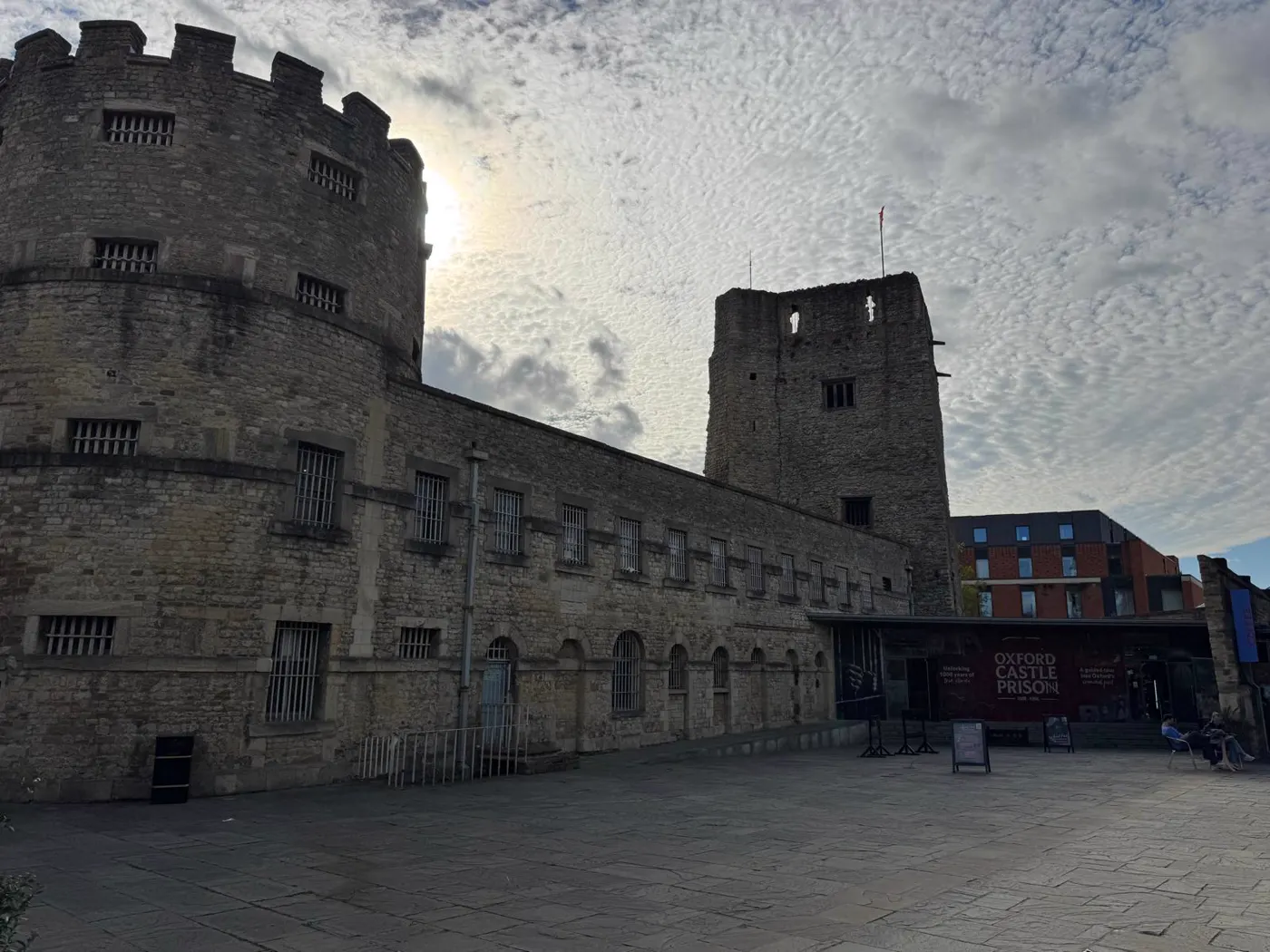
Case study · Oxford Castle & Prison
Why the closer and the pivot are replaced together
A door hung on a transom closer turns on two points. At the top, the closer’s spindle drives the side arm and controls the swing; at the bottom, a pivot assembly set in the floor carries the weight and keeps the leaf on its axis. The two share the load, and when one fails the other starts to suffer. At Oxford Castle & Prison the bottom pivot had worn to the point where the leaf had dropped and was running out of true, and the closer above it had been dragged sideways by that for long enough to give up its own control of the door. Fitting a new closer alone would have put it straight back under the same side load.
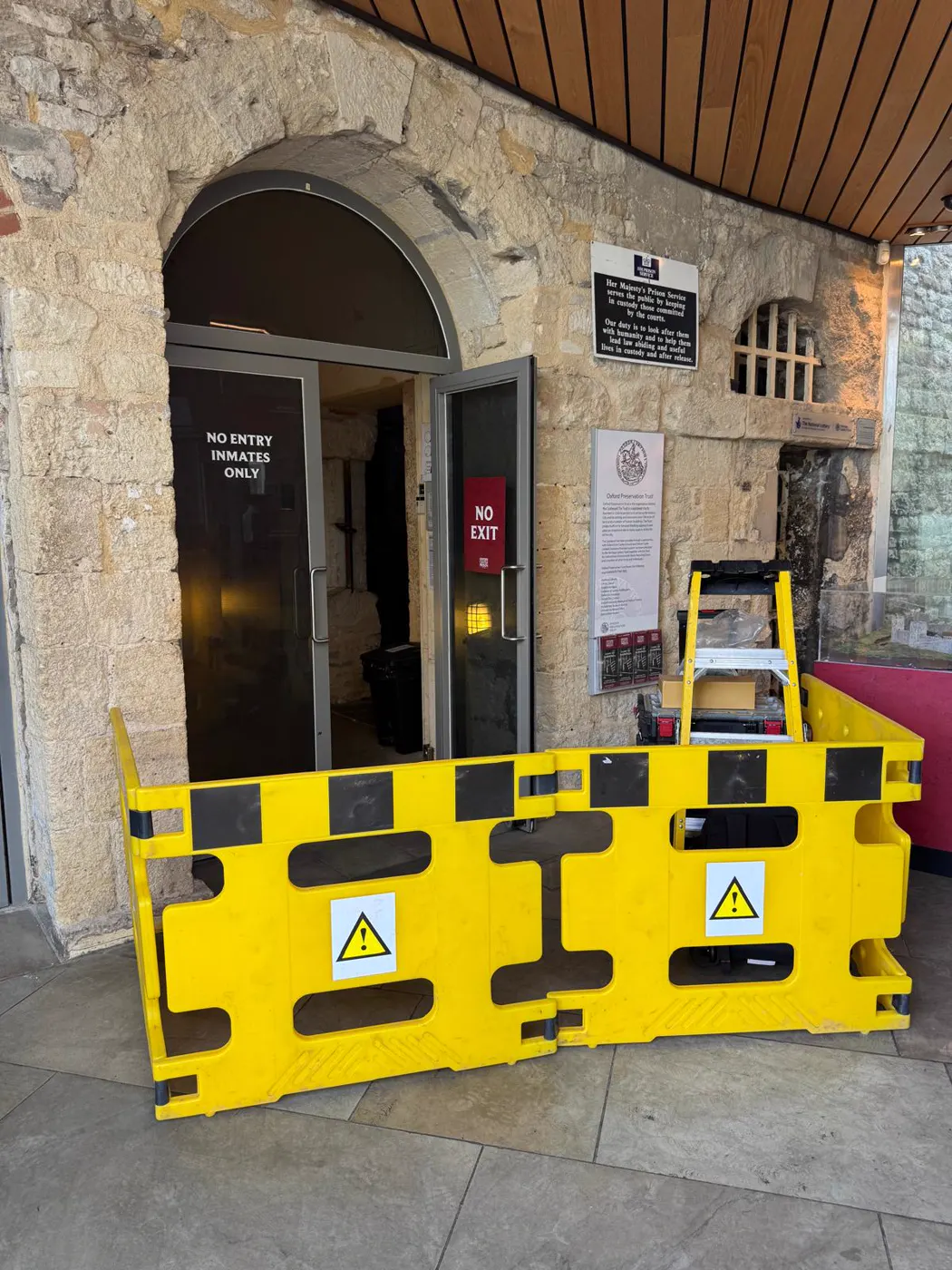
The site adds its own conditions. The archway is original stonework and the glass door is a later insertion into it, which means the frame is fixed to the reveal in a way that must not be disturbed, nothing new goes into the masonry, and the finishes of the plates and arms have to sit quietly against what is already there. On top of that the attraction is open seven days a week, with guided tours moving through the courtyard on a timetable. The job was planned as a single visit with the opening barriered off, the leaf down for as short a time as possible, and the door handed back before the afternoon tours.
The transom closer and side arm
The closer lives inside the aluminium transom bar across the head of the frame, with only its spindle showing. Once the leaf was lifted off, the arm was released from the top rail, the closer slid out of its channel, and the new unit went in on the same fixings with a new side arm connected to the door. The closing and latching speeds were set once the door was back on both its pivots — there is no point adjusting a closer on a door that is not yet hanging true.
The bottom pivot assembly
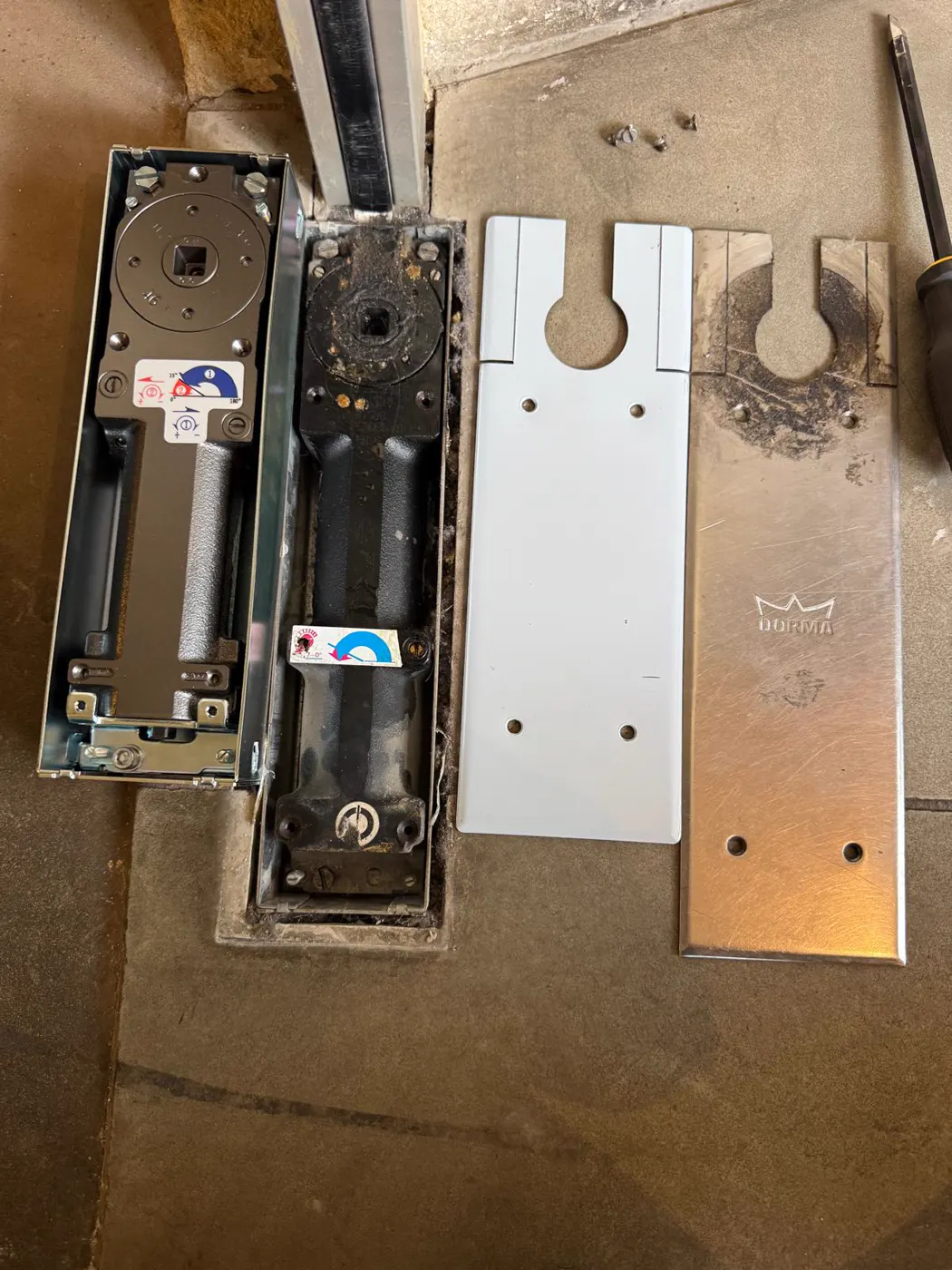
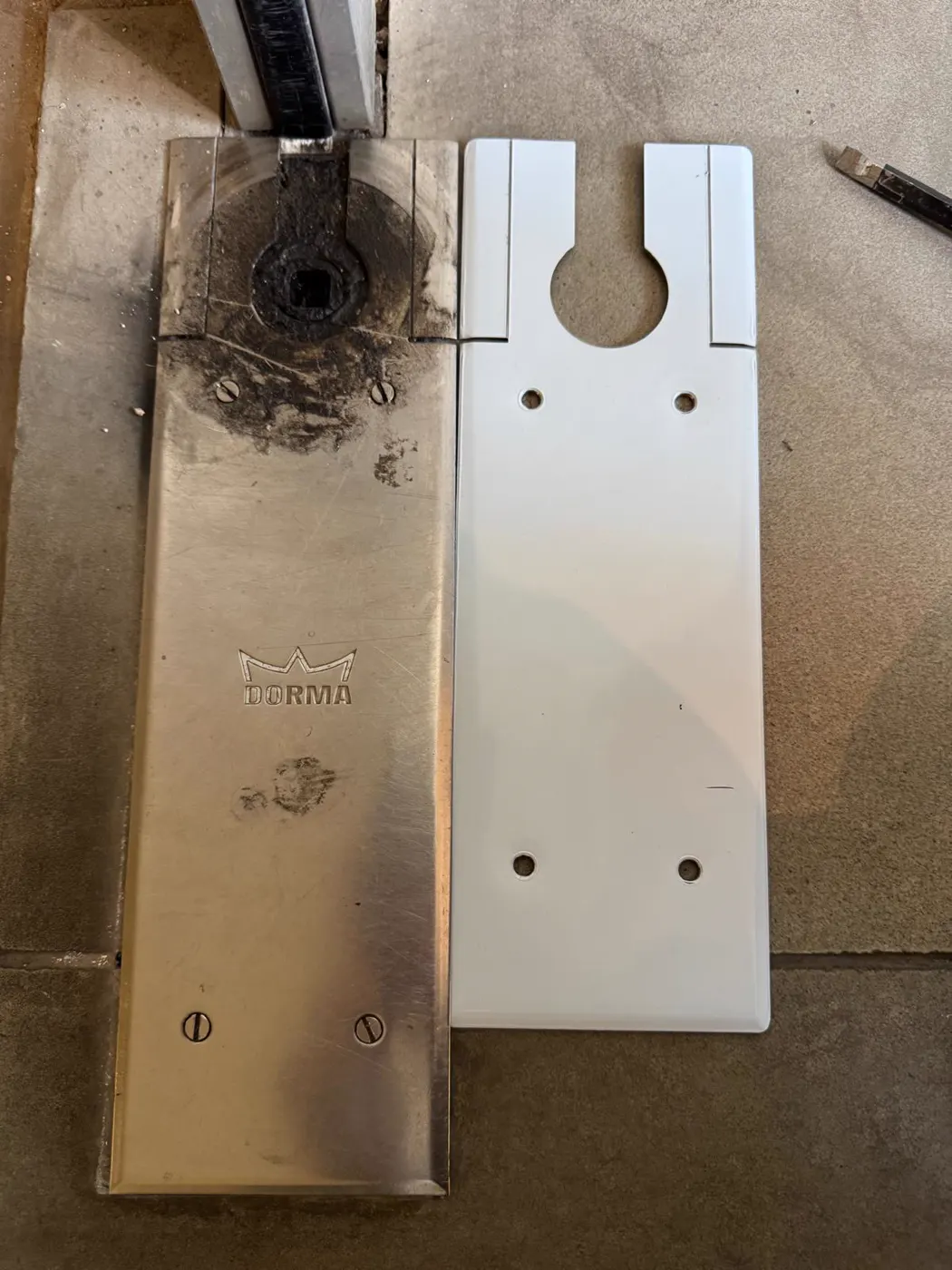
Under the threshold the old assembly sat in a steel floor box beneath a worn Dorma cover plate, the spindle hole ringed with years of grit. It was lifted out, the pocket cleared and checked, and the new pivot assembly bedded on fresh fixings and set to height so the leaf would sit level in the arch. A new cover plate, cut to clear the bottom rail, was laid flush with the stone floor. The photographs on this page show the old and new units side by side on the flags before the swap — the simplest illustration of why the door had dropped.
Work completed at Oxford Castle & Prison
- Diagnosis — framed glass door in the stone archway dropping on its pivot and swinging uncontrolled; closer, arm and floor pivot all worn.
- Access — opening fenced with barriers; attraction open throughout, visitors kept clear of the threshold.
- Transom closer — concealed closer removed from the head and replaced; new side arm fitted to the top rail.
- Bottom pivot — worn assembly lifted from the floor box; pocket cleared; new assembly bedded, levelled and fitted with a new cover plate.
- Re-hang — leaf re-hung on both new points, plumbed in the arch, closing and latching speeds set.
- Handover — door back in service the same day, finishes consistent with the existing hardware, no fixings into the historic masonry.
Door repairs for heritage sites and attractions across Oxford
Commercial Door Maintenance and Security Ltd repairs glass and aluminium doors across Oxford — the college estate, Westgate and Cornmarket retail, and the museums and visitor attractions that run on daily opening hours. Transom closers, pivots and floor springs are the parts that wear first on a busy entrance; a photograph of the door and its threshold is usually enough for us to identify the hardware and quote the same day, and we schedule around tours, term dates and trading hours as the site needs.